LaRISA – Large Res Integration Stability Analysis
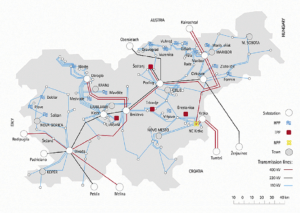
The Slovenian network will experience in the next 10 years a high growth of electricity demand, decreasing inertia due to an high level of RES penetration (40% in energy coverage), and an increasing level of cross border exchanges. Stability issues must be tackled in network planning exercise.
MuESSLi
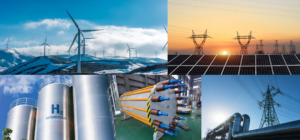
MuESSLi aims at “smart-linking” simulation tools to perform cross-sector, actually scalable, simulations and enable the optimal development and operation of an holistic “energy system” (power, heat, transportation, etc.) with electricity and hydrogen as main carriers.
BiGER2 Explore
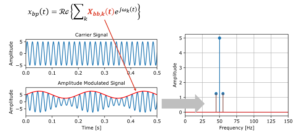
New stability issues and phenomena are emerging with the more important part of Power Electronics Interfaced Resources (PEIR), and in particular slow converter driven interactions have been observed in a number of real situations. Their impact – until now – has been limited due to either the tripping of the units or manual effective counteractions. However, all the indicators (SCR, ESCR, etc.), used to measure potential risks of interactions, reach low values in future scenarios until the grid-forming components become predominant in all the system.
In this context, it seems necessary to answer these two important questions:
1. Is there a risk of propagation of the adverse interactions through the system or will it remain limited to a few installations?
2. How to understand, explain and reproduce the issue on small test cases?
TWINEU (pilot 8)
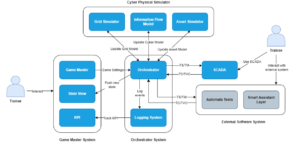
The power system is undergoing major changes due to the integration of renewable energy and power electronics. To support system operators from day-ahead planning to real-time operations, new smart assistant tools are being developed. Despite these tools, operators will continue to play a central role in anticipating issues, coordinating distributed controls, and managing balancing and congestion. To prepare these future operators, existing decision support tools need upgrading and realistic testing environments. This goal is being pursued through the European project TWINEU (Pilot 8), with further enhancements from the TRAISIM side project—both forming parts of a unified initiative.
TRAISIM
The objective of this project is to build a power system training Digital Twin that could be used to train future operators.
This training Digital Twin will be partly developed by the European project TWINEU (Pilot 8, covered by Task 5.5 – A power system training simulator for complex and critical situations) and be enhanced by this side project called TRAISIM.
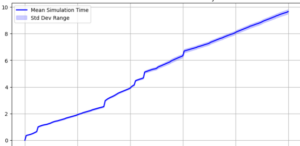
TRAISIM focuses on the acceleration of the real-time simulator embedded in the training simulator, where the simulation must operate at least as fast as the actual physical processes it replicates.
Optgrid
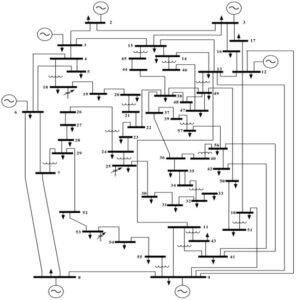
Optimisation of the grid configuration (topology) for the power grid operation to ensure an acceptable level of electricity supply reliability.
Restoration
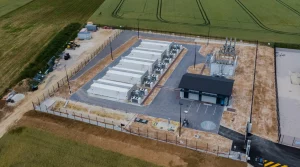
Restoration aims at exploring the advantages and disadvantages of power-electronics interfaced components during network restoration procedures, and to outline recommendations for BESS-based restoration plans.

COLib
COLib (https://colib.net) is the library of opensource, verified energy network component models and test cases
WOLF-I
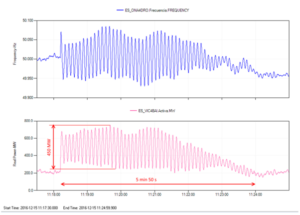
WOLF-I stands for Wide-area Oscillations of Low Frequency with presence of IBRs (Inverter-Based Resources). Wide-area oscillations is a complex phenomena on power systems, all the more difficult to model and simulate that power electronics devices are now involved. On the other hand, the technology may bring in new opportunities.
Harmony
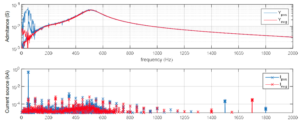
Harmony is a toolkit for easy harmonic analyses of (local EMT), to assess multi-terminal HVDC power systems, TSO-DSO interface, controller interoperability and HVDC protection.

CoRFu
CoRFu stands for “Control Room of the Future”. It is a doctoral network (“DoNet”) about energy system operation tools.
PSy
PSy is a doctoral network (“DoNet”) about power system stability, joining BiGER, Harmony, LaRISA, COLib, Restoration a.o.
TwinEU
TwinEU is the digital twin of the European power system. The project is sponsored by the Horizon Europe program under grant agreement n° 101136119.
MESTo
MESTo is a doctoral network (“DoNet”) about multienergy issues, joining MUESSLI, Planeterr, CREAM a.o.
Inter-oPEn
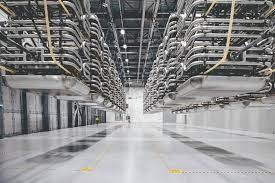
Complementary to other related research (interOPERA, HVDC-wise, etc.), Inter-oPEn investigates how openness (“whiteboxes” especially) can unlock interoperability issues of power electronic (PE) devices in power systems, marrying both technological and legal aspects. The project is sponsored by EC’s Horizon Europe program
DiSST
DiSST expands the SOGNO platform to help distribution companies meet their 3D goals (digitalisation, decarbonation, decentralisation).